
The full story
Munavvar Qori Abdurashidxonov
Pioneer of new-method schools in Tashkent
1878 – 1931
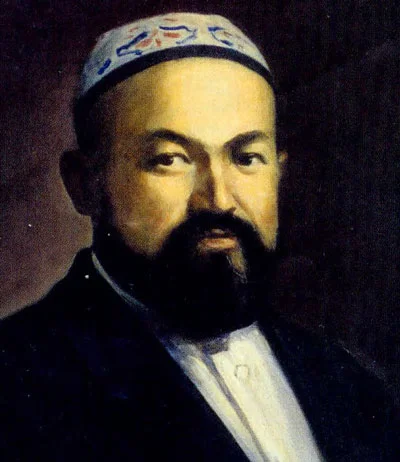
Born in Tashkent in 1878 into a lineage of educators, Munavvar Qori studied in both Tashkent and Bukhara and emerged as the chief architect of modern schooling across Turkestan. He opened one of the first new-method schools in Tashkent in 1901, wrote the textbooks it needed, and launched several newspapers that between them created a national press where none had existed. After 1917 he continued pressing for educational reform while holding official posts. Arrested in 1929, he was executed in Moscow in 1931.
A school, then a system
The new-method school — usul-i jadid — was a modest-sounding idea with radical consequences: teach the alphabet by sound rather than by memorising whole passages, add arithmetic, geography and natural science, and let a child finish in four years instead of ten. Munavvar Qori's 1901 school in Tashkent was among the first, but his real achievement was refusing to leave it as one school. He wrote the primers, trained the teachers, published the curriculum, and built a network that spread the method across Turkestan faster than the authorities could decide whether to permit it.
The press as a second classroom
Schools reach children; newspapers reach their parents. Munavvar Qori understood that a reform confined to classrooms would take a generation to matter, so he founded and edited a succession of papers aimed squarely at adults — on hygiene, on debt, on why a daughter should be taught to read. The colonial censor closed titles repeatedly and he simply started new ones. That habit of persistence made him a marked man twice over: first to the Tsarist administration, then to the Soviet one, which arrested him in 1929 as a nationalist and shot him in Moscow two years later.
Key achievements
- Opened one of Tashkent's first new-method schools in 1901 and trained a generation of teachers
- Wrote foundational Uzbek textbooks, including primers still cited in the history of Uzbek pedagogy
- Founded and edited newspapers that established a Turkestani national press
Further reading
Opens on another website